To compare perfume discovery set packaging quotes, ask each supplier to price one complete empty presentation pack at the same order quantity. Define that pack in a sentence. For example, you might need one printed box, one fitted insert and eight positions for vials that your brand already owns. Ask who supplies the empty vials, who puts them in the box, and where the supplier’s responsibility for delivery ends. Keep the physical sample on a separate line. You can then see whether the difference comes from the box itself or from work that only one supplier has included.
A fragrance buyer raised a price concern after receiving a quote for a multi-vial box. Our reply specified a printed magnetic box and a flocked insert. The bottles and perfume were outside the scope. The sample line covered artwork preparation, a physical box with its insert and delivery of that sample. If another offer had simply said “discovery set,” there would have been no reliable way to compare the two totals. Here is how to put both offers on one sheet before you commit money to either.
Write the buying unit at the top of the sheet
Say you want 250 presentation boxes with eight fragrances in every box. That calls for 250 boxes, 250 eight-position inserts and 2,000 vial positions. Those figures describe an example order. The number of empty vials you need to buy from the packaging supplier could still be zero. If your filling partner already has the glass and caps, write “vials supplied by brand” beside the quantity. If you want the factory to source the glass, request a separate line for 2,000 capped vials. State any spare quantity separately so both offers use the same count.
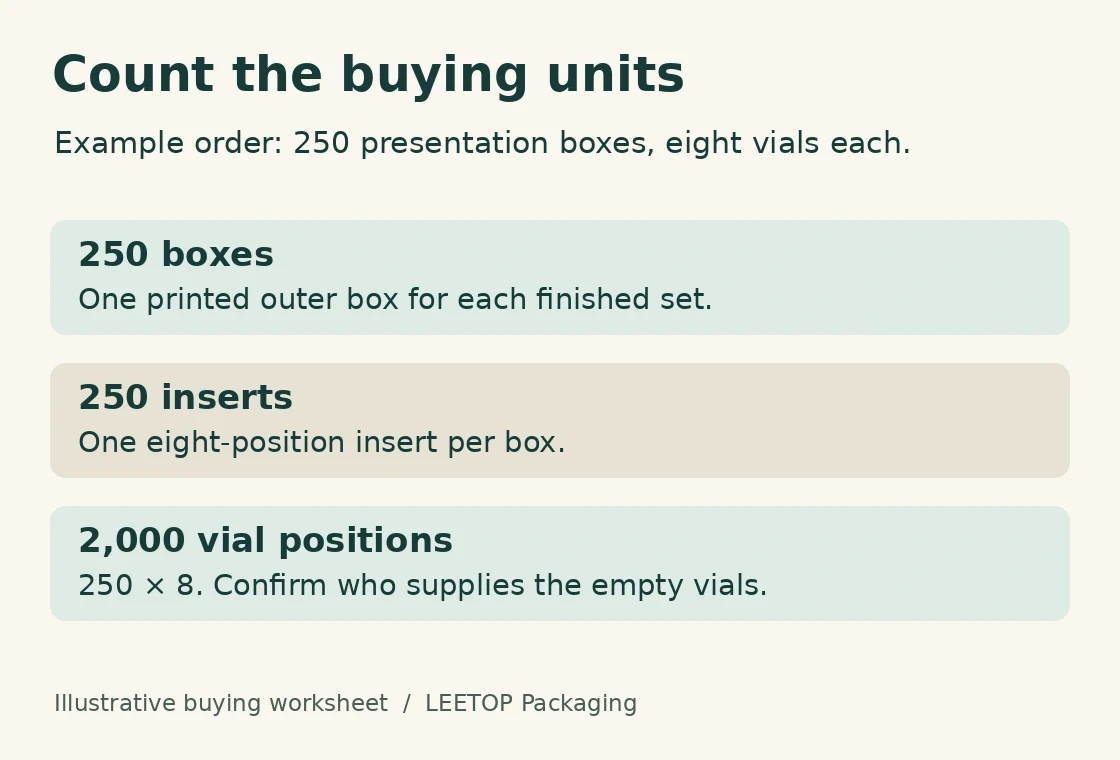
If eight scents share one printed box, send that information with the quantity. Eight scents do not automatically mean eight versions of the box artwork. On the other hand, if every scent needs its own printed sleeve, ask for the quantity per sleeve design. A supplier pricing one run of identical sleeves is answering a different brief from one preparing eight printed versions. Put the artwork revision and the number of designs in the row beside the price.
Match the printed box before comparing the finish
Lay the two box specifications side by side. Look for the assembled dimensions, structure, board, wrap, print locations and closure. If one quote describes a rigid magnetic box and the other says only “printed carton,” send a picture of the open box you expect and ask for a revised description. A closed beauty shot can show that the cover looks right while telling you very little about the construction inside. If you welcome a less expensive structure, request that as a second option so you can still compare the original.

One detail worth circling is a gold logo in a rendering. It might be a gold-colored area printed with the rest of the artwork, or it might call for a separate foil impression. Ask the supplier to name the process it has priced and show what would change if you chose the other finish. Keep the position and logo size fixed when you request that change. Otherwise a price difference can include both a larger mark and a different process.
Find the fitted insert and the empty vials on separate lines
An insert photo helps with finish and layout. It does not establish who is buying the glass. Write down the number of recesses, the material and surface finish of the insert, and whether it arrives installed. In an offer for black flocked EVA, “flocked” describes the short fiber covering on the foam. A plain cut foam insert can have the same shape and a different visible surface. If the price is attractive, confirm the surface before you approve the substitution.

If the supplier is sourcing the empty vials, ask what comes with each one. Glass body, sprayer and cap should be named if you need all three. For a brand-supplied vial, send the capped dimensions and a physical reference when available. Two vials marked 2 mL can have different outside dimensions. If you are still deciding how the bottles should sit or lift out, use the discovery set layout and insert fit guide before locking the insert drawing. On the quote sheet, also say who will load the finished vials. Installing the empty insert and loading eight labeled vials are two different jobs.
Separate sample delivery from bulk freight
An air-delivered sample answers a different question from a bulk shipment of assembled boxes. Record what will reach your desk for the sample fee. Does it include your print file preparation, the decorated box, the intended insert material and shipping to your address? If a finish is simulated or the sample uses a substitute insert, note exactly what you can approve from it. A sample of the correct size can settle a fit question while leaving a foil or surface decision open.
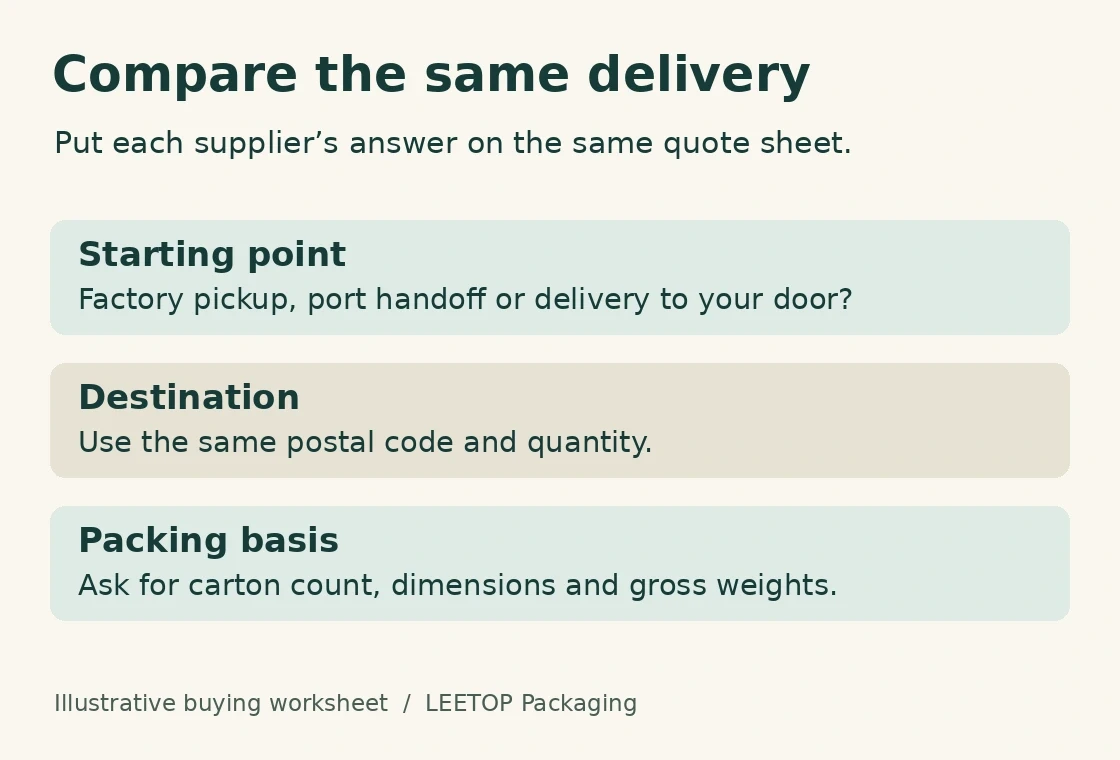
For bulk freight, give both suppliers the same delivery address or postal code and the same quantity. Ask where the quoted service ends and which charges you will still need to pay separately. A factory pickup figure and a door-delivered figure cannot be compared until you add the missing leg. Ask for estimated packed carton count, carton dimensions and gross weights. If packing is still provisional, keep that estimate dated on your sheet and ask when the supplier will confirm it.
Calculate first-order cost and reorder cost
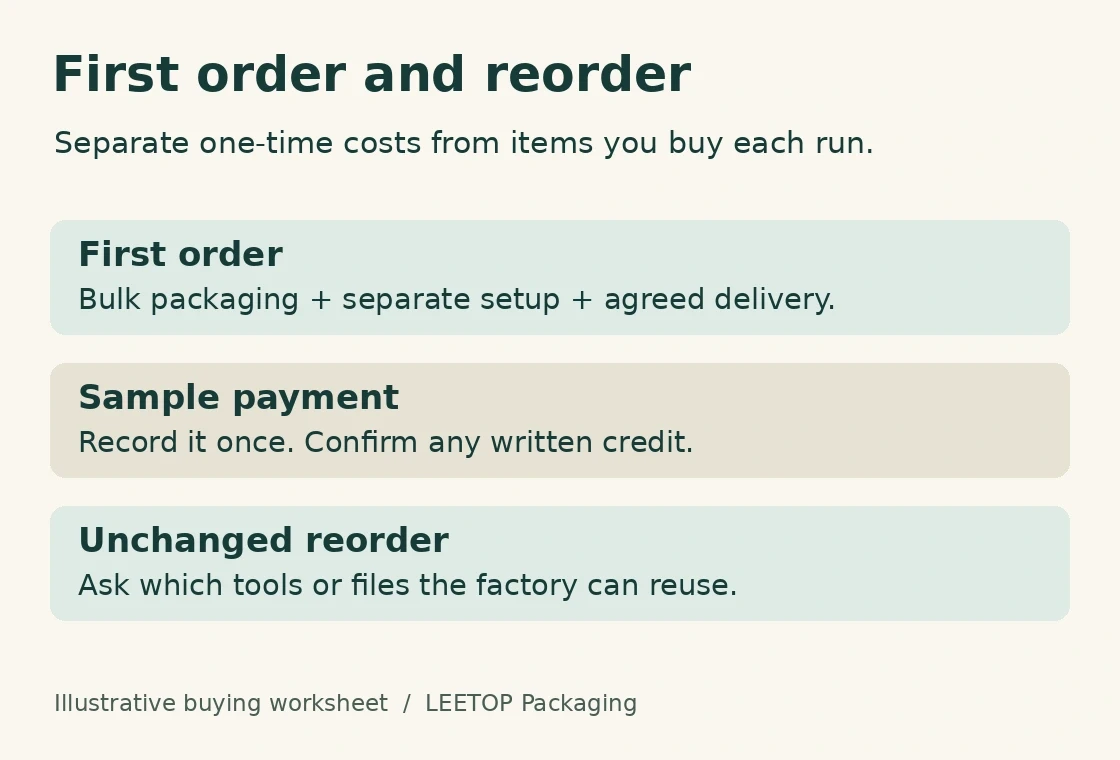
Start with the quoted bulk unit price for the agreed box and insert. Multiply by the number of sets. Add separately priced components, any one-time setup and the delivery charges for your chosen handoff. If a supplier says the insert or setup is already included, mark it included and leave the extra charge at zero. If the supplier has not answered, leave the cell open. A blank answer about the insert can change your choice of supplier. Treating that blank as a zero can hide the difference.
Keep two totals if you have paid for a sample. One is what remains to pay for the production order. The other is what the project costs from the first sample through delivery. Apply a sample credit only if the supplier confirms the amount and the conditions in writing. For the next order, ask for the price at the same quantity with unchanged artwork and insert geometry. A different vial or a revised logo can change which tools the factory can reuse. Label any reorder estimate with those assumptions.
Send one comparison request to both suppliers
A short request gives the supplier something it can answer line by line. State your set count, the number of capped vials per set, who supplies them, your box structure, the insert finish and your destination. Ask for the box and insert as one subtotal, optional empty vials as a second subtotal, and separate figures for the sample and bulk freight. Specify the currency. Ask the supplier to flag every price based on an estimated dimension or an unfinished artwork file.
If you are ready to request custom perfume boxes with fitted inserts, include the same sheet and two views of the packaging you want. A useful last question is, “What would my team still have to buy or do before we could put this set on a shelf?” That is often where an omitted cap, a loading job or a separate delivery charge finally shows up.