For shoulder neck rigid boxes, approve the closed profile and the lid's movement together. A neat colored band is not enough if the lid rubs at one corner, the base comes up with it or the product is difficult to remove. Start by deciding what should remain visible when the box is closed, then check that choice on the wrapped, filled sample.
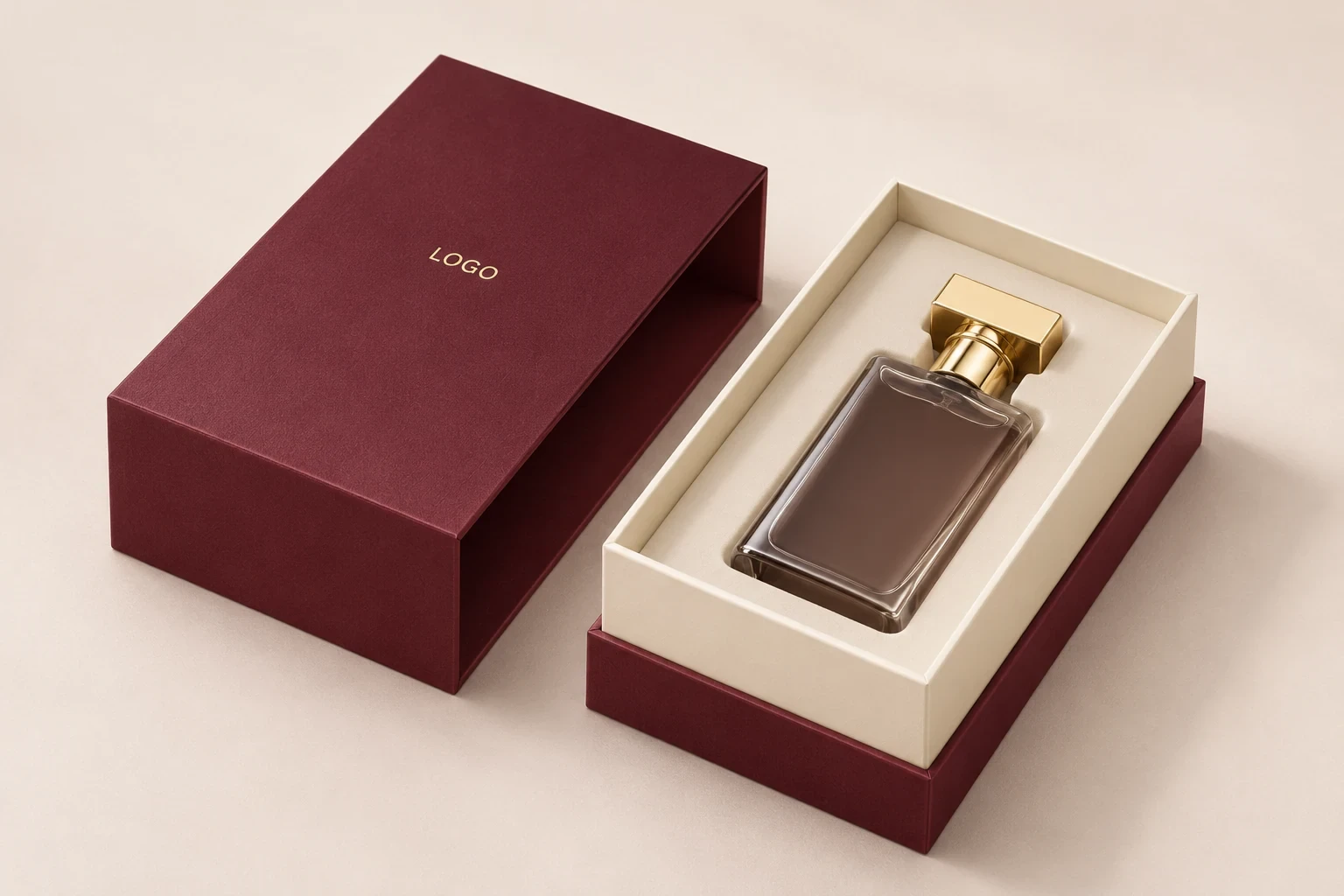
Separate the collar from the product insert
A shoulder-neck box has a rigid base, a separate lift-off lid and an inner collar fixed inside the base. The collar rises above the base wall and provides the surface around which the lid fits. The insert sits within that structure and positions the product. Changing one does not automatically solve a problem with the other.
For a bottle set, confirm where the bottle weight is carried and where the fingers can reach. A taller collar may make the open box look more substantial while also hiding more of the product. Raising the product to make it visible can reduce the space available under the lid.
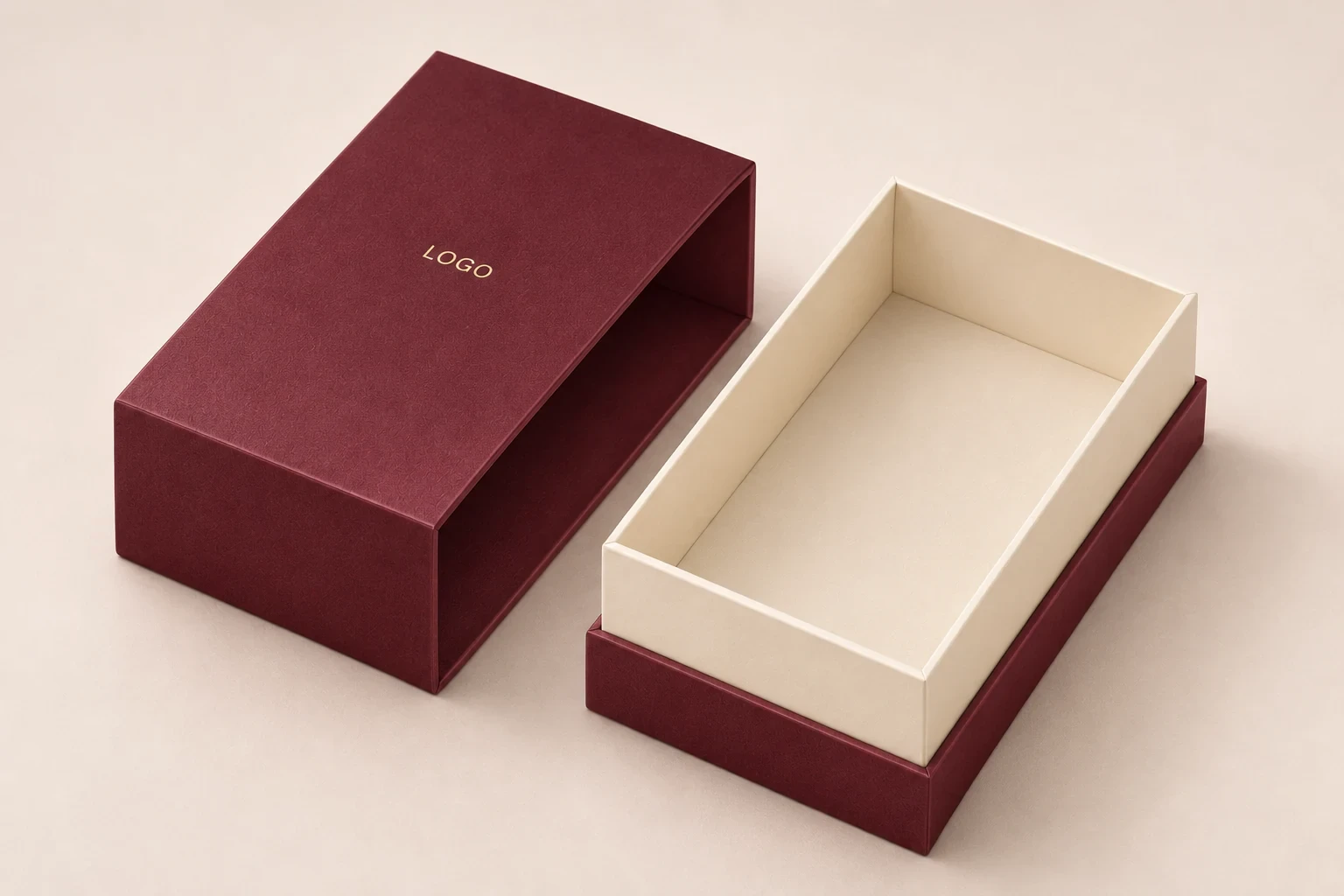
Choose a visible band or a concealed neck
Visible band: A strip of the collar remains exposed between the lid and base when closed. Decide its color and intended appearance on all four sides. Ask the supplier to explain how the lid is supported at that position. A lid sitting high because the bottle is pushing against it is not an intentional reveal.
Concealed neck: The collar is hidden when the lid is seated, giving a more continuous closed exterior. Review the meeting line and how easily the lid lifts. A concealed neck still needs enough engagement to guide the lid without scraping the wrap.
Neither choice has a universal best gap or opening time. Agree the proportions and fit on the actual construction. If you mainly need a straightforward lift-off lid and have no use for a collar, compare a lid and base box before adding the third component.
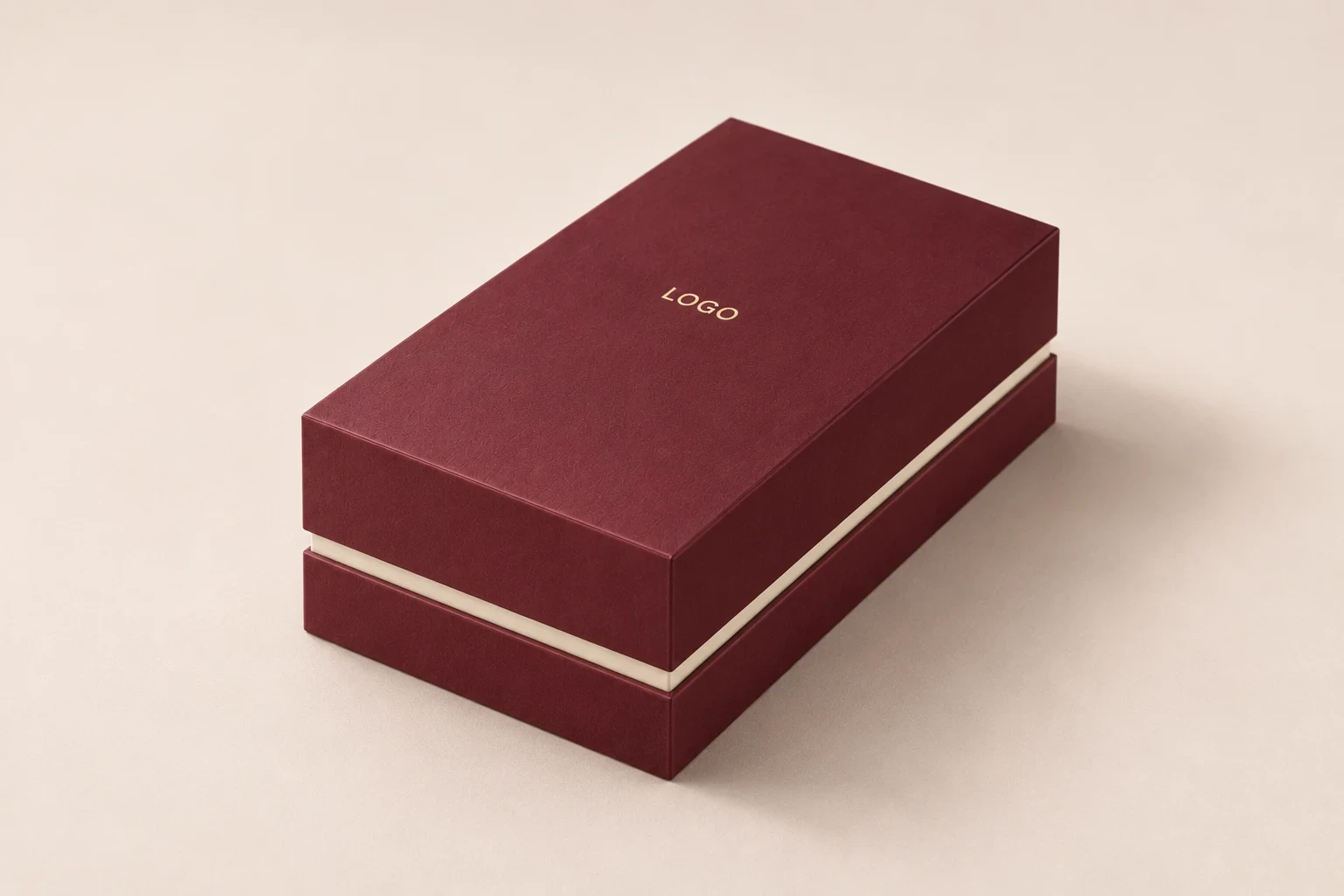
Keep the paper choice in the fit discussion
A smooth printed wrap and a textured specialty paper are different surfaces. When you change the paper or lining, ask the supplier to recheck the lid-to-neck fit rather than assuming the original sample still represents it. Inspect the corners and wrapped seams where layers meet.
For custom shoulder boxes with a contrast collar, review the visible paper edge as well as the color. Foil or printing on the collar also needs a separate artwork position; part of that panel may disappear under the lid. Show both the closed view and the open view in the artwork approval.
Use a repeatable sample check
- Close the empty box: Seat the lid without forcing it. Look at the meeting line or exposed band from each side.
- Lift and replace the lid: Support the base with one hand. Note rubbing, sudden sticking or a lid that tips to one side; agree the desired opening feel.
- Load the exact product set: Add the insert, capped product and final card or pad. Check that the product is not determining where the lid stops.
- Remove the product: Use the intended finger access or pull tab. Make sure removal does not rely on pulling a fragile cap.
- Keep the approved reference: Record the wrap, lining, collar appearance and filled condition. Ask how these checks will be carried into production.
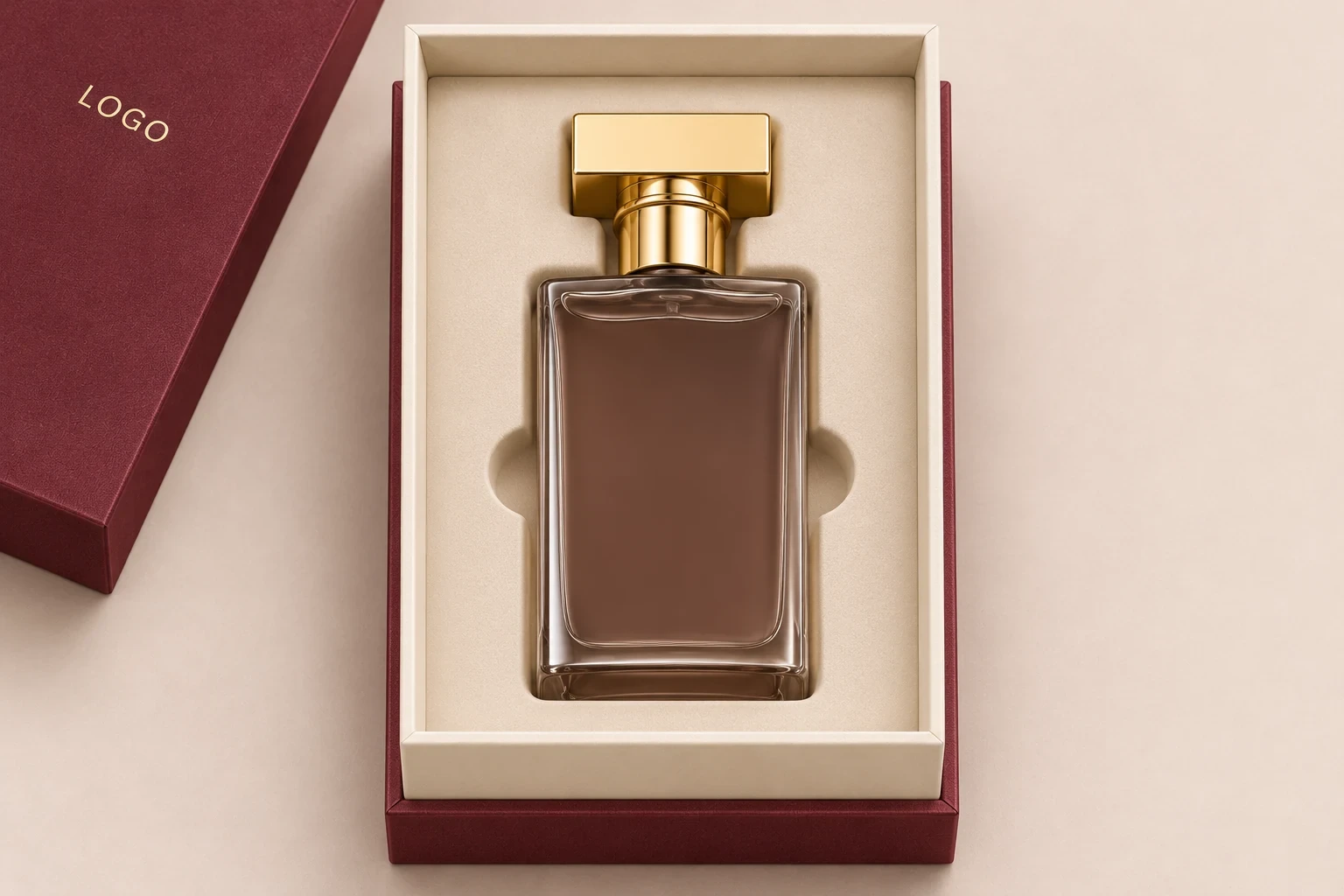
Describe what you accept in observable terms. For example, the lid seats without pressing on the product, the agreed band remains visible around the box and the bottle can be removed using the planned access. A sample approved only for its color leaves these functional decisions unresolved.
Brief LEETOP on the closed and open views
LEETOP offers shoulder neck boxes from 100 pieces, with printed or textured wraps and fitted inserts. Send a reference for the closed profile, product dimensions and weight, the intended collar color, quantity and delivery destination. Request a shoulder-neck sample quote and identify which parts need checking before bulk production.