If a magnetic gift box closes neatly while empty but lifts when filled, check the packed height and the lid's path before asking for stronger magnets. The insert, a bottle cap, folded tissue or a card may be keeping the closing surfaces apart. A stronger magnet does not create the missing space.
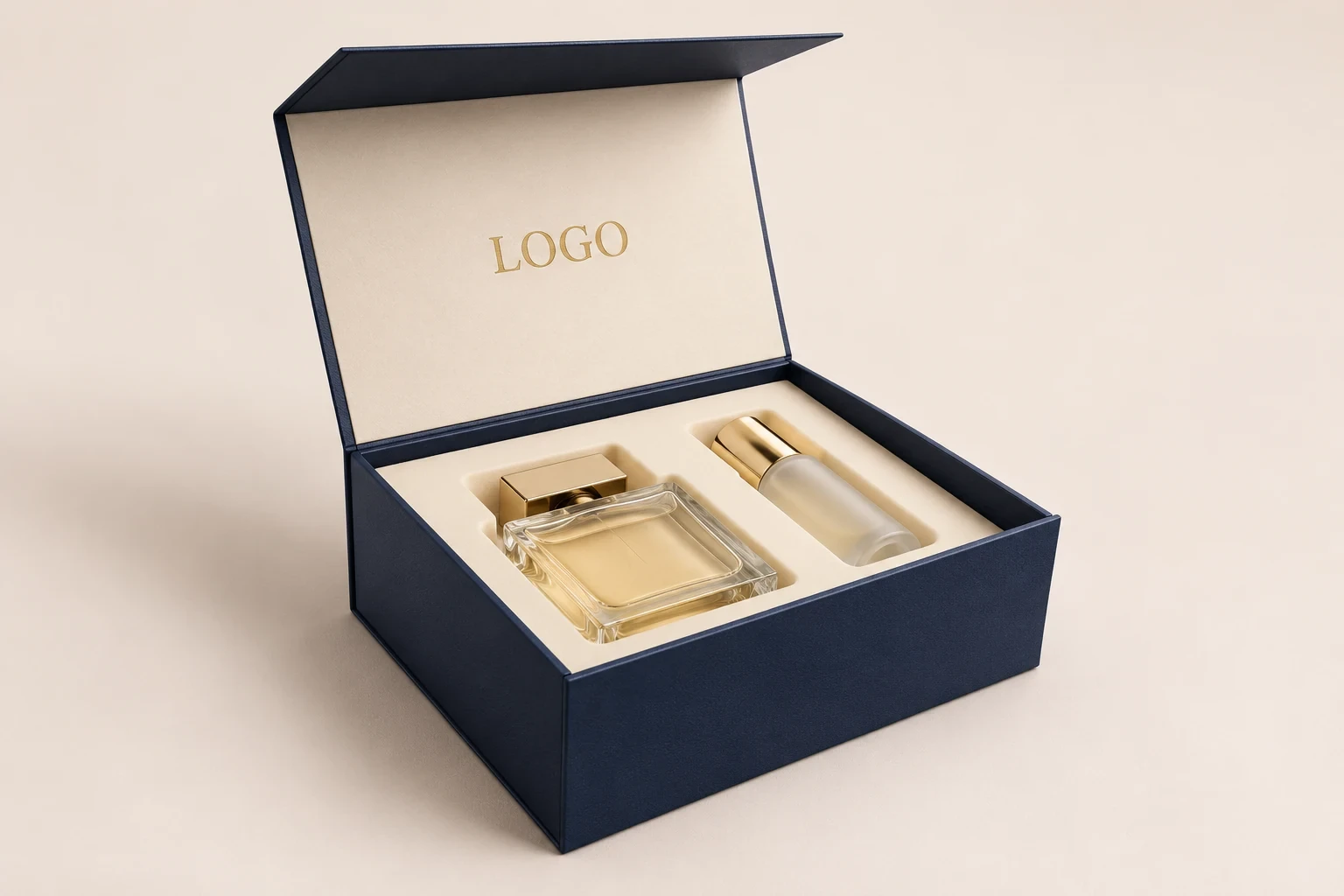
Start with an empty box, then add one layer at a time
Buying magnetic closure boxes wholesale means the same small fit issue can repeat across the order. A staged check is more useful than a photo of someone holding the lid shut. Put the sample on a level surface and let the lid close without keeping a hand on it.
- Empty box: Check whether the cover lies level and the front flap meets the front wall. If it already lifts, have the supplier review the spine, cover geometry, wrapping and magnet alignment.
- Insert only: Add the actual insert, including its lining and any bottom pad. Check whether it sits flat or presses against the walls.
- Products: Load the capped products in their intended positions. Look for contact at a cap, shoulder or raised accessory.
- Final extras: Add the card, tissue, ribbon and any top pad. If the problem appears now, record the last addition before changing the box.
Insert thickness is not the same as packed height
A product partly recessed into foam still projects above it. Ask for the cavity depth as well as the insert's overall thickness. Measure from the box floor to the highest point of the loaded set, in the exact orientation used for packing.
Illustrative geometry only: Assume 60 mm of usable interior height, a 30 mm insert resting directly on the floor, an 18 mm-deep recess and a product 36 mm thick in its packed orientation. The product top is 30 − 18 + 36 = 48 mm above the floor. Add a 10 mm top pad and a 3 mm card, and the uncompressed stack reaches 61 mm. It already exceeds the space before any working clearance is allowed.
These are invented dimensions for the calculation, not a production specification. Foam compression, product protection and the required clearance need agreement on the physical sample. Removing a protective pad is only an option if the revised pack still provides the protection the product needs.

Check the hinge and closing flap before changing magnets
Once you have ruled out contact with the contents, look at the box from the front, both corners and the spine. A cover that is being pulled out of position by its hinge needs a different correction from magnets that do not meet. Ask the supplier to show where the two closing surfaces align on the finished sample.
Keep magnet strength and opening comfort in the same discussion. The recipient should be able to open the box without bending the flap or pulling the tray up with the lid. Agree the opening feel using a sample rather than an unverified description such as extra-strong magnets.

Approve the box in the condition you will actually pack it
A structural sample can help check size and product fit. If the wrap, lining or finish will change, confirm those details on the finished approval sample too. Save a short video showing the empty box, the loading sequence and the filled box closing after the hand is removed.
Record the product version, insert material and thickness, cavity depth, all added layers and the accepted closure. Have the supplier state how the approval sample will be used to check the bulk order. Closing by hand is a useful fit check; it does not establish parcel-shipping performance. Review the outer shipping pack separately.
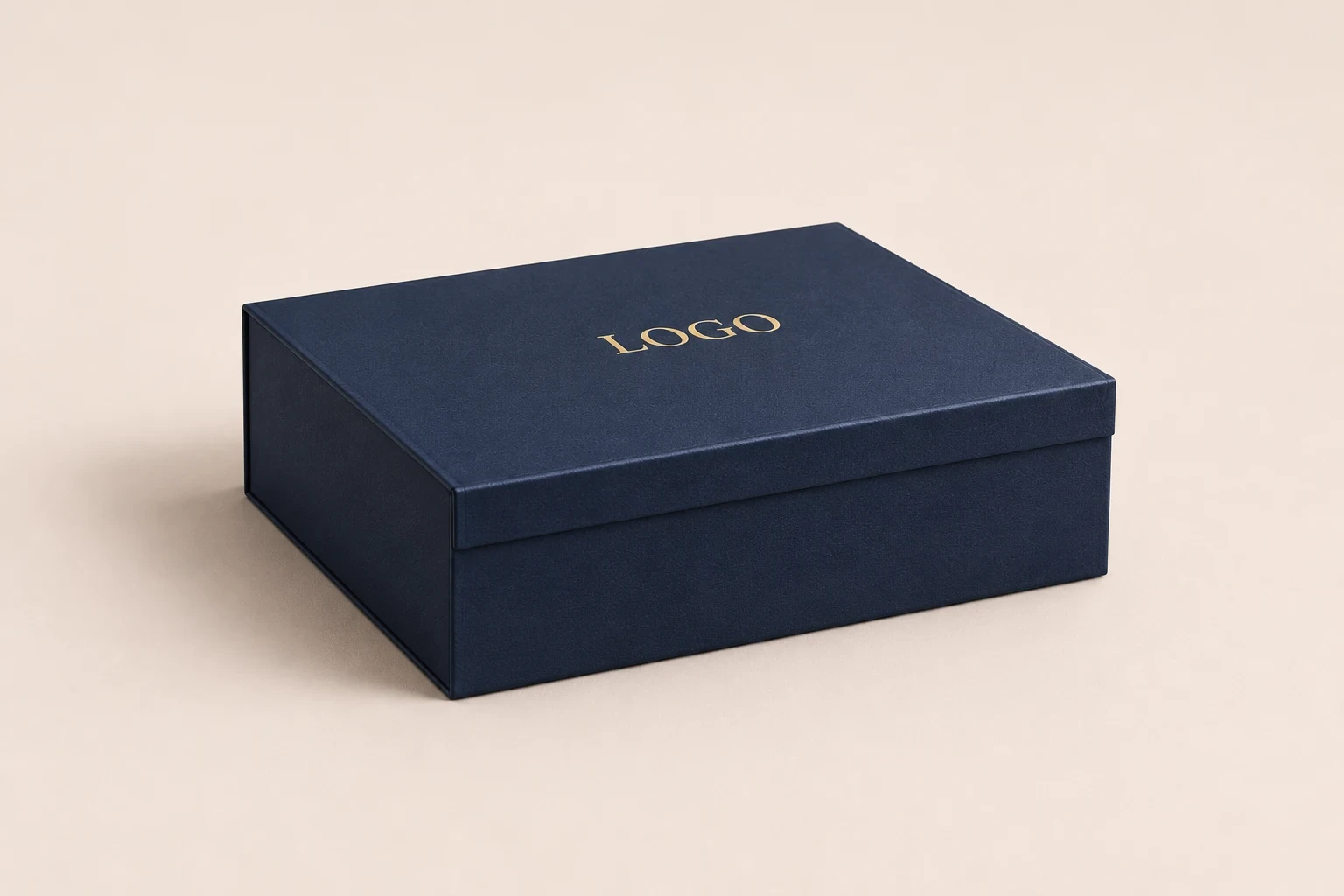
Send LEETOP the filled-pack details
LEETOP's custom magnetic boxes start at 100 pieces, with physical samples quoted separately. Send the product dimensions and photos, quantity, preferred wrap, insert and every item that goes above the products. If you already have a sample that lifts, include the staged closing video. Request a box and insert review so the quote addresses the part that actually needs changing.