When comparing custom folding cartons with a corrugated option, check the inside space before keeping the old box size. Thicker board takes up more room at the walls and folds. That can change whether an existing foam insert fits.
A buyer recently asked us to copy a laminated paperboard gift pack and also quote a thicker version. The original used 350 gsm paperboard. The alternative being discussed used corrugated board with a printed white-card face and a white inside.
The foam pieces already had specified sizes, and the buyer wanted flat delivery. That made this more than a simple material swap.
Keep the two quotes easy to compare
We treated copying the original and making the thicker version as two separate options. Each needed its own material description, finished size and list of included foam pieces.
Keep the quantity, printing and delivery details the same when comparing the prices. Otherwise, you may be comparing two different orders without realizing it.
Our custom folding cartons cover printed paperboard packaging. If you are considering a different board, send the original pack so we can review the change around its actual folds and contents.
Write down what the thicker board includes
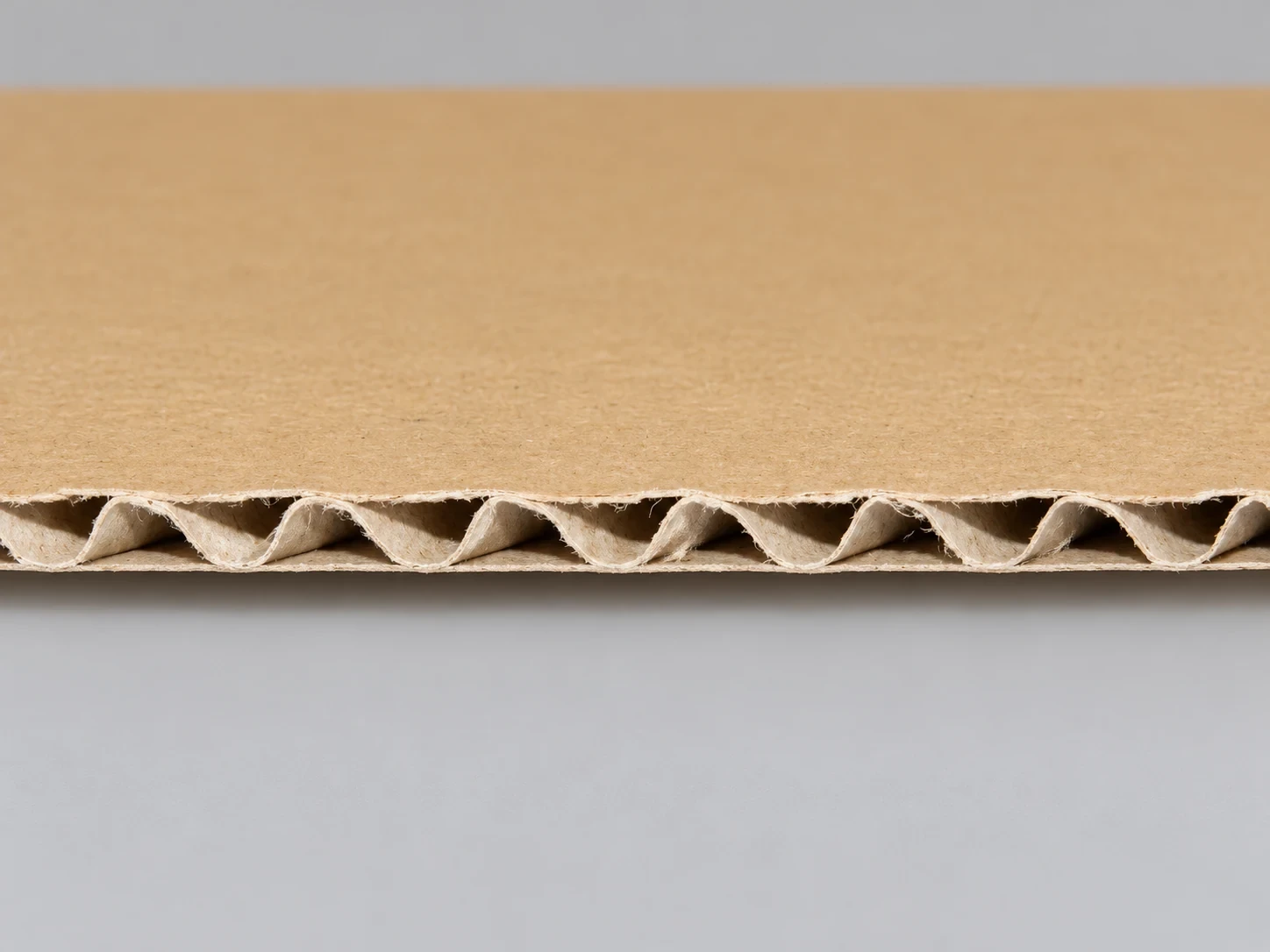
Corrugated board has a wavy paper layer between flat liners. FEFCO explains that construction.
If printed white card is mounted onto it, list that separately. Do the same for the inside paper and the finish. The word thicker does not tell the supplier which board to quote.
Decide whether the foam size must stay the same
In this inquiry, the main foam piece was specified at 215 × 155 × 48 mm, with a separate 3 mm top pad. There were also separate pieces for smaller drawer boxes.
We needed to check those pieces against the usable inside space of the assembled box. The outside measurements of the old box could not answer that question.
Simple example: if each of two opposite walls becomes 1 mm thicker while the outside size stays fixed, the space between them loses 2 mm. Extra folds can use more room, so this is not enough to revise the cutting drawing by itself.
Agree which size matters most. If the existing foam must stay, the outside box may need to change. If the outside box must stay, the foam may need a new size.
Include the pad when checking the height
A 48 mm foam piece and a 3 mm pad add up to 51 mm if they sit on top of each other. That does not make 51 mm the right box depth. The product might sit higher, and the lid still needs room to close.
Load the real contents, add the pad and close the box normally. If the lid is raised or presses on a cap, find the contact point before changing the design. Review the outer box and foam inserts together.
Update the drawing and try the flat kit
Thicker board can change the folds, tabs and corners. Update the flat cutting and folding drawing, often called a dieline, before putting the artwork back onto it. Check which side is inside and outside using the printing approval guide.
For flat delivery, confirm what arrives pre-glued, what is separate and whether the packer needs glue or tools. Ask for one complete flat kit as well as the assembled sample. Try putting it together with all the foam pieces and contents.
Send us the original box photos, foam sizes and the change you want. We can work through the two options without losing track of what needs to fit.