Size custom presentation boxes around the finished, bound book and plan how someone will lift it out. The page size is only part of the measurement. A box can look neatly fitted in a mockup and still leave the reader struggling to get the book out.
A recent buyer wanted a magnetic box for a hardcover presentation booklet, with a choice of cream linen texture or black soft-touch matte. The booklet used letter-size pages, but the cover was larger. Before settling the box, we needed the finished cover dimensions and bound thickness.
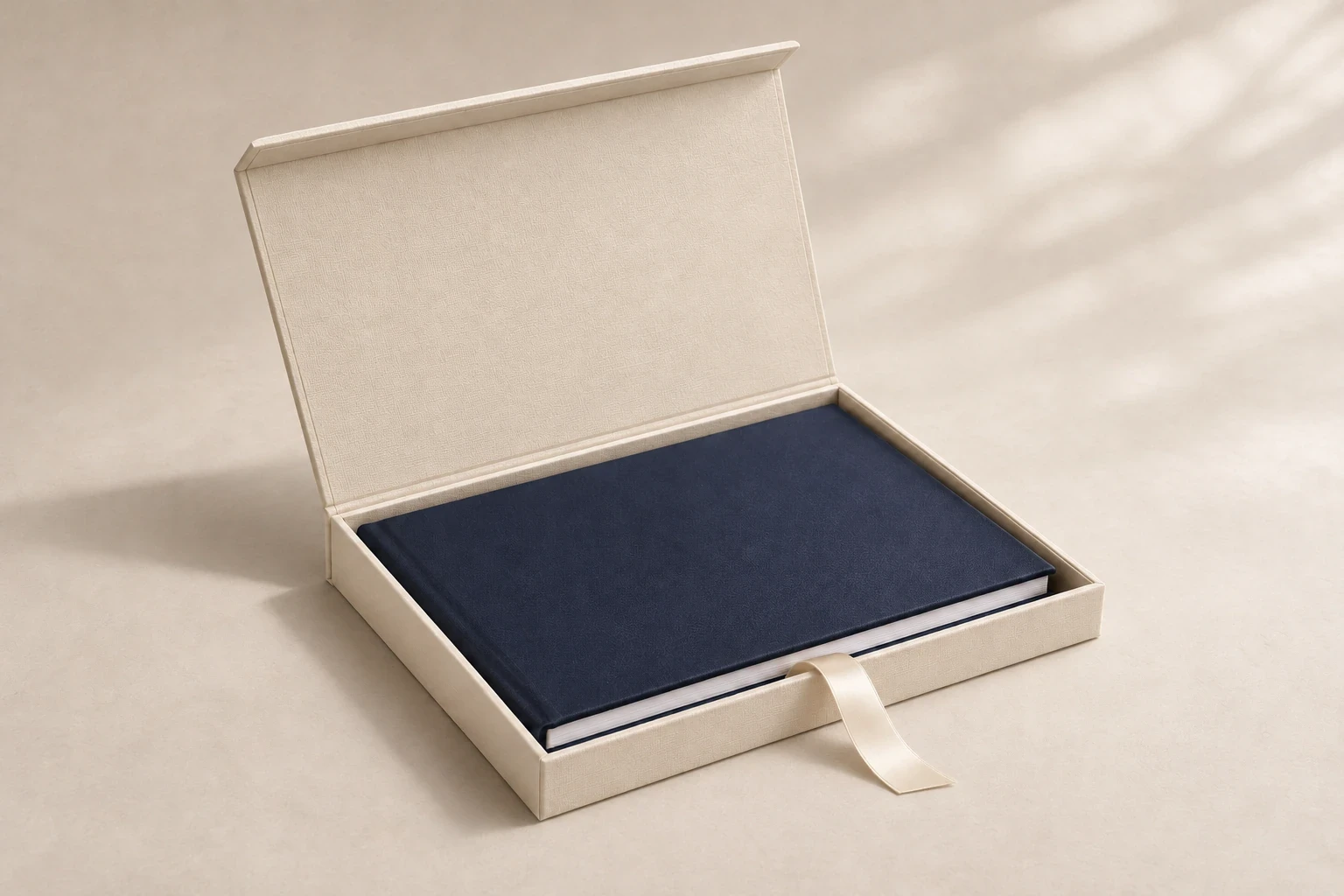
Measure the copy that will go in the box
Measure the closed book across the cover, along the spine and through its full thickness. Include a dust jacket, slip-on band or other part that stays on the book. If the binding is still being developed, tell the box supplier which measurements remain provisional.
A bound copy is more useful than a page-size note. It lets you check the cover overhang, spine shape and corners against the proposed tray. Confirm whether a quoted box measurement is an inside measurement or an outside measurement; they cannot be used in the same way.
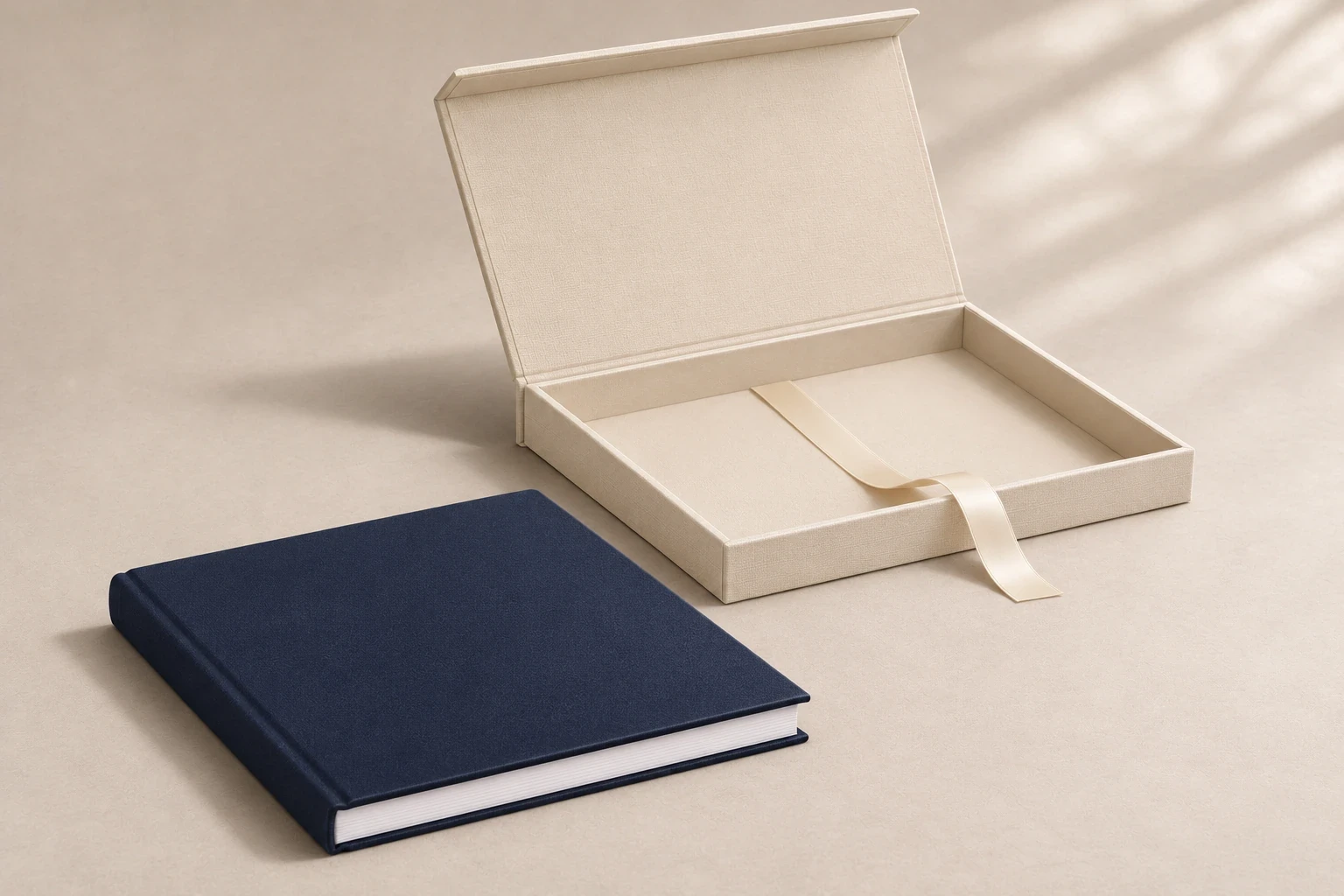
Give the ribbon or finger recess a clear job
A lifting ribbon should pass beneath the book and leave an end that can be reached after packing. Check where it is fixed and where it lies when the lid closes. The ribbon should help raise the book enough to grip it; it is not a handle for carrying the whole box.
A finger recess can also work if it gives enough access to the edge without making the book move around. Try the proposed method with the actual copy. If you have to turn the box upside down or pry at a cover corner, the fit still needs work.
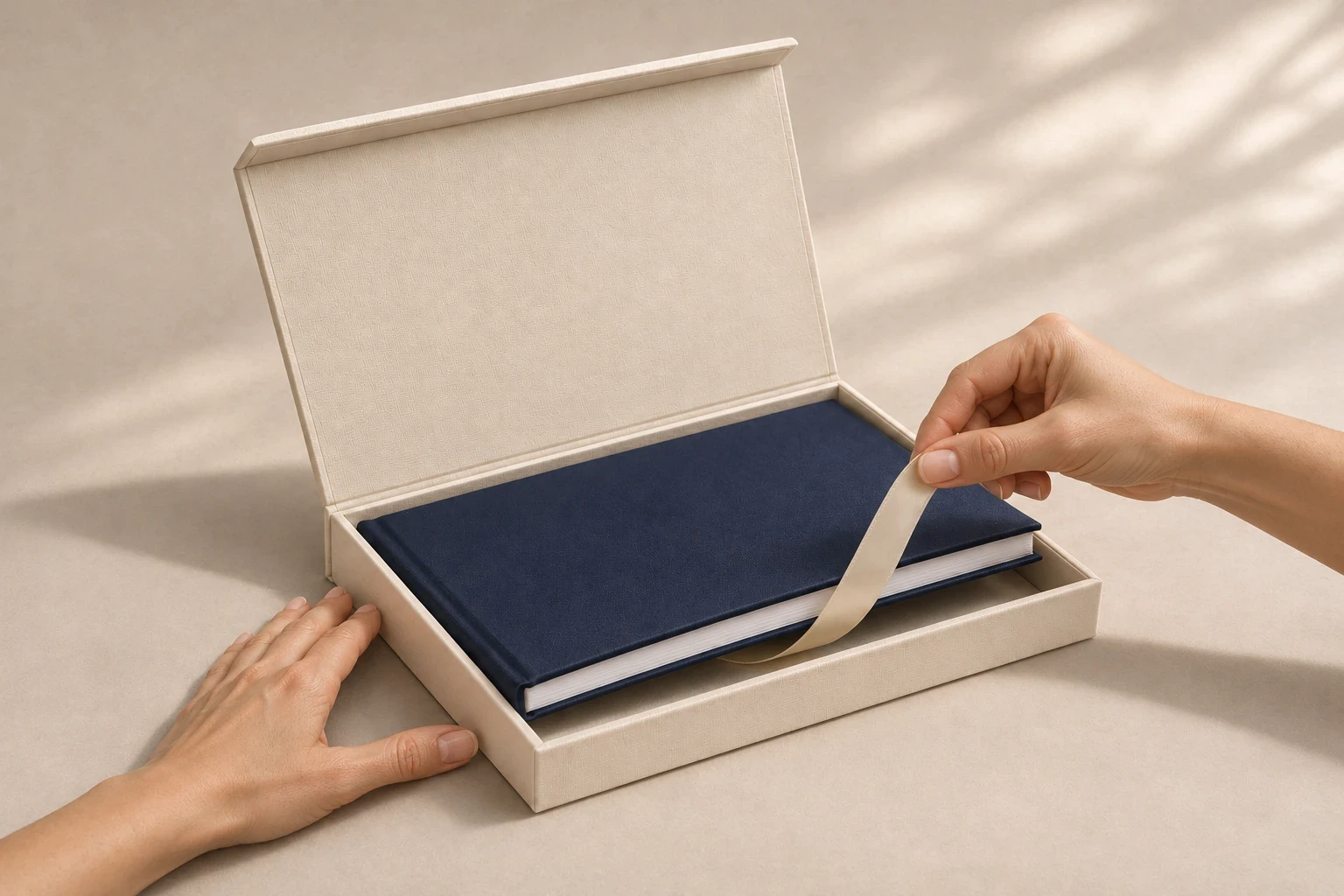
Open it on the desk before approving the artwork
Put the box in the position the recipient will see first. Open the lid and check which way the book faces. A book-style magnetic box describes the box's hinged opening; it does not automatically give you the right book orientation or a usable reading layout.
Decide whether the book will be removed before reading. If you expect it to open while still in the tray, test that separately with the binding fully opened. A tight well that presents a closed cover neatly may get in the way when the book opens.
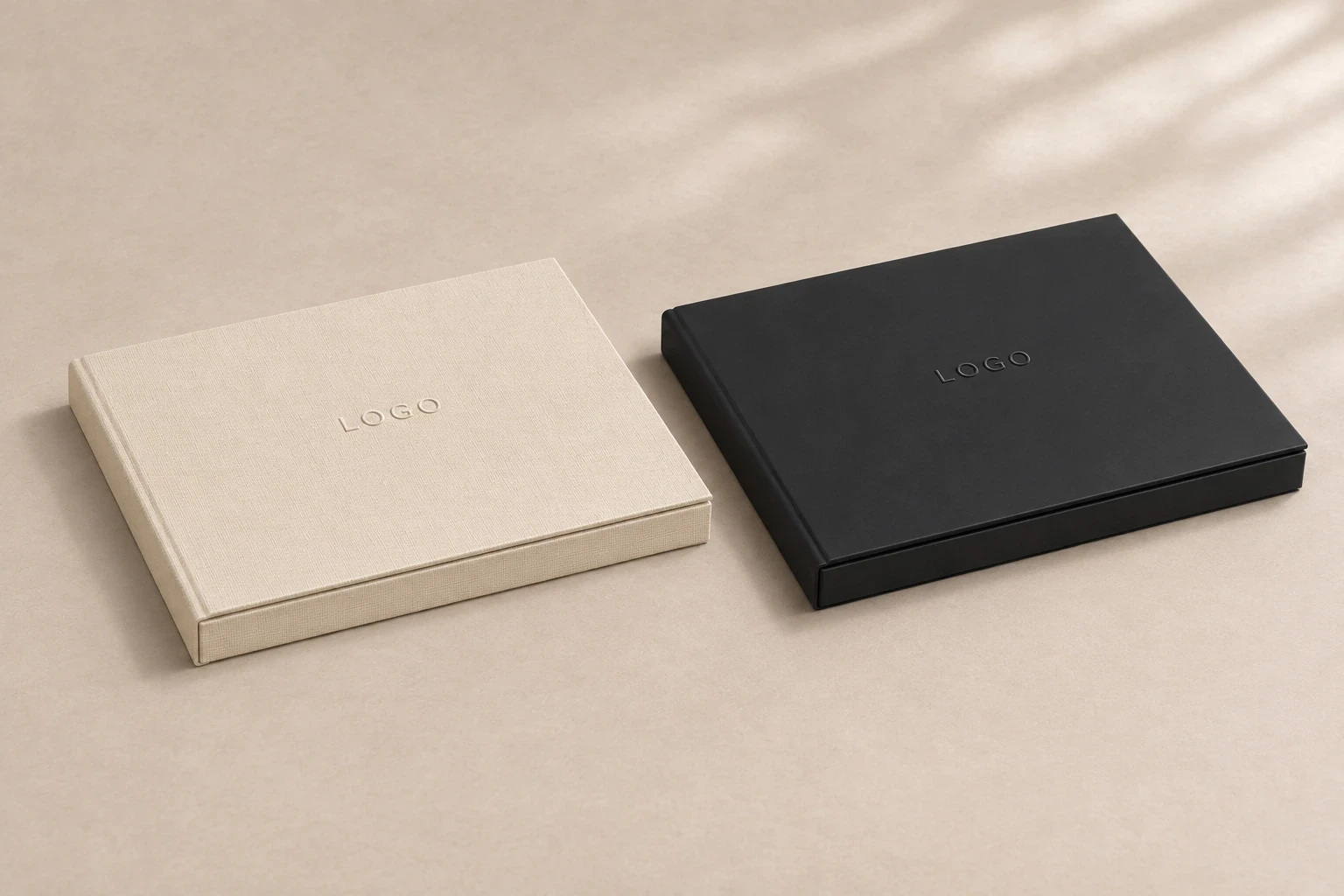
Compare the actual finishes at the final logo size
Cream textured paper and a black soft-touch laminated wrap are two different material choices. Get a real paper or finish sample, then confirm the logo on the chosen surface. A texture printed in a picture will not tell you how either feels.
Keep the branding positions clear too. Mark the closed lid, inside lid and any ribbon or insert branding separately. If the look only calls for a small lid monogram, make sure the quote and production artwork say exactly that.
Ask what the larger quantity saves in total
For a small presentation project, ask for quantity breaks that match your likely use. In the recent inquiry, the buyer asked to compare 100, 200, 300 and 500 boxes, along with samples and shipping. That is more useful than comparing four unit prices with different inclusions.
Ask how the empty boxes, inserts and ribbons will arrive, and request the packed carton dimensions when freight is being confirmed. A deeper box creates more empty space to pay for and store. Any depth reduction still needs to leave room for the finished book and its lifting method.
LEETOP's custom magnetic boxes start at 100 pieces. Send the finished book dimensions, a photo of the bound copy, your quantity and destination. Request a presentation-box sample with the paper, logo and lifting detail listed, so you can check the way it works as well as the way it looks.