Plan custom PR boxes as a complete journey from shipping carton to product removal. The box should arrive in the intended condition, reveal the right products when opened, and give the recipient a clear way to lift them out. A large logo or elaborate opening cannot compensate for an item that moves, a card that obscures the product, or an outer shipper that was never included in the brief.
This guide is for beauty and fragrance brands buying empty packaging for press and creator kits. It focuses on packaging development and the handoff to the team that will fill and dispatch the kits. Posting, audience reach, and campaign results are separate from the physical packaging specification.
Define the first view before selecting the box style
Write down what the recipient should see immediately after opening the presentation box. Identify the main product, the supporting items, and the one piece of information needed to understand the collection. Then decide where the campaign card belongs.
A card laid across the products creates a different first view from a card attached inside the lid. A ribbon across a bottle may help removal but cover its label. A tall cap may sit clearly above the insert yet interfere with closing. These are layout decisions that should be settled with a physical sample.
Photograph that sample from the intended opening direction. Check whether product labels remain legible, whether the lid stays where intended, and whether the pack needs someone to hold it open. Review the arrangement with all items loaded, including the card, accessories, and any protective coverings.
Separate presentation from parcel protection
Specify the presentation box and the shipping package as separate components. If the presentation box will be placed inside another carton, show both in the packing instructions. The shipping label, tape, and opening cut should have designated locations.
FedEx's packing guidance recommends a corrugated outer box for chipboard gift boxes. Apply the relevant carrier guidance to the actual shipment and validate the complete packed arrangement.
Before asking for a freight estimate, confirm whether the supplier is quoting empty presentation boxes delivered together, complete empty packaging kits, or filled kits dispatched to individual recipients. Those are different scopes. Do not assume that a box production quote includes product filling, recipient management, or local fulfillment.
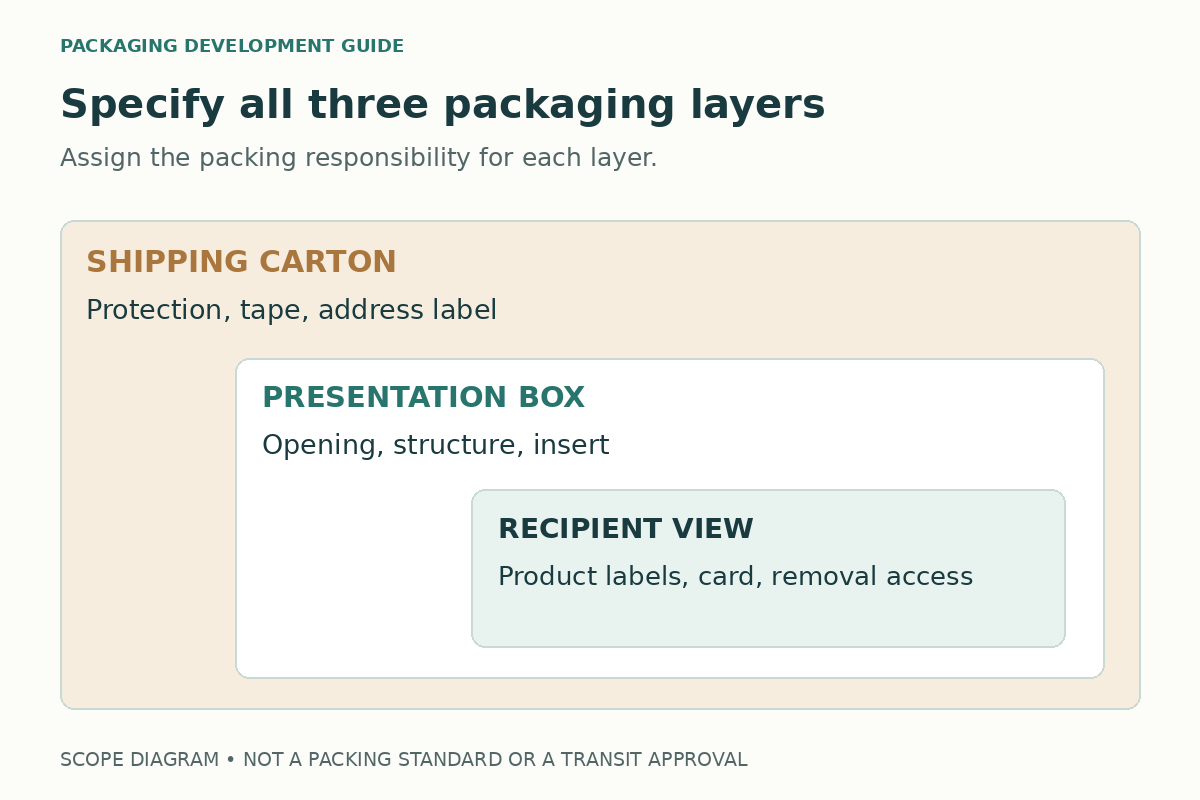
Approve the opening sequence with the final contents
Give each stage a clear acceptance question. Can the shipper be opened without cutting the presentation box? Does removing protective material expose the intended face? Can the presentation box open fully on a normal work surface? Can each product be removed without pulling on a pump, cap, or decorative attachment?
Temporary protective material also belongs in the review. A foam block added for transit may hide the main product. A loose card may slide beneath a jar. A separate instruction sheet may be discarded with the outer packing. Decide which pieces remain visible and which are deliberately removed before the main reveal.
For a fragrance kit, confirm the shipping requirements for the actual filled products with the responsible shipper. The empty paper presentation box does not determine the transport classification of its contents. Keep the packaging supplier's scope and the filled-product shipper's scope explicit.
Control personalization without changing the whole box
Consider putting recipient-specific information on a separate card when late changes are likely. A common presentation box can then remain consistent while the card varies. This is an option to price and sample, not a guarantee of lower cost.
The fulfillment team needs a reliable match between the recipient record, the card, the correct product assortment, and the shipping label. Agree on a matching method before printing personalized components. Use a neutral order or kit identifier where appropriate, and keep recipient details in the authorized fulfillment system.
Review how exceptions will work. A replacement kit may need a fresh card. An unassigned spare should not contain another person's name. A late product substitution may change both the insert and the printed product list. These decisions belong in the campaign brief rather than being improvised during packing.
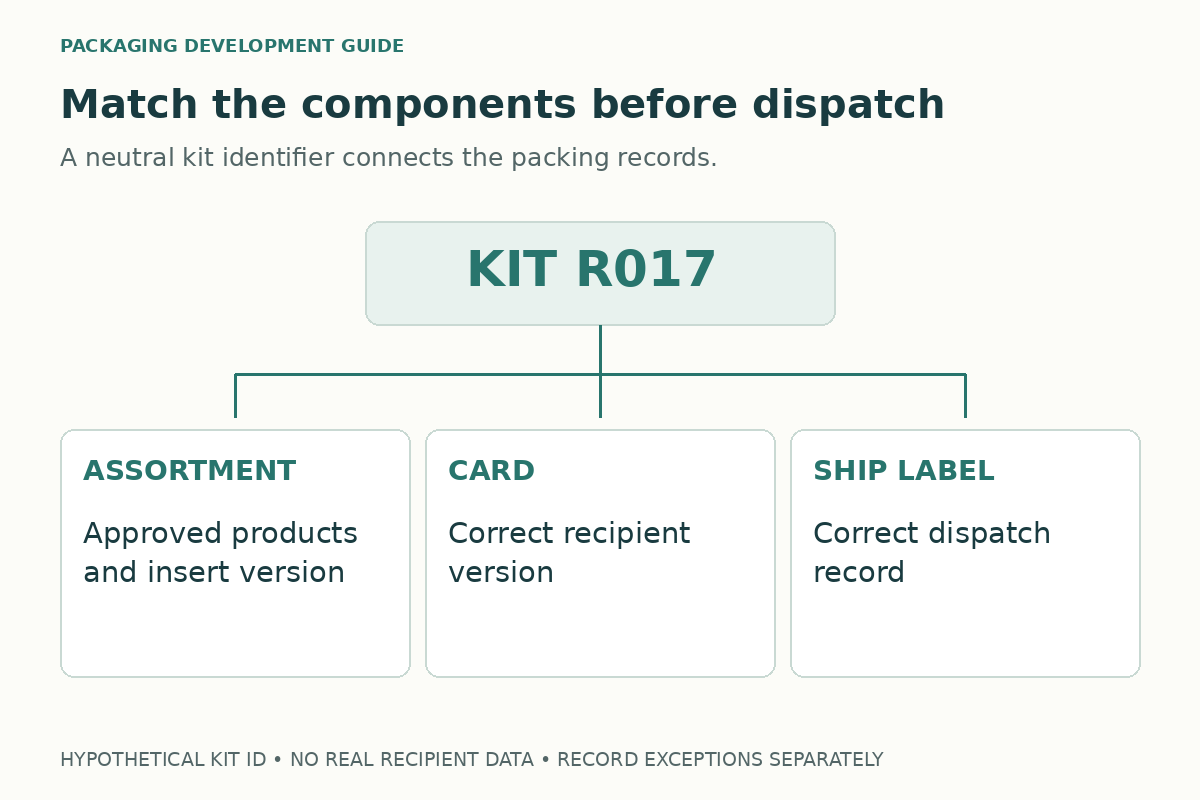
Build the schedule around approvals and product availability
Start with the required arrival date and work backward with the parties responsible for each stage. Record the dates for receiving approved products, confirming the structure, approving printed components, finishing box production, delivering empty packaging, assembling kits, and dispatching parcels.
Some work can proceed together. Structure development can use representative products while copy is being finalized, provided the remaining changes are understood. Other decisions are dependent: changing a jar diameter after approving its insert may require a new sample.
Ask who owns every handoff and what evidence marks it complete. A digital image may confirm copy placement; it cannot show whether a loaded lid closes. The LEETOP sample options distinguish ways to review physical packaging before production. Choose the sample scope that answers the outstanding questions.
Compare quotations using the same delivered scope
Send suppliers one component list and one packing description. Identify the presentation box, insert, printed card, protective pieces, outer shipper, and the condition in which each arrives. State whether inserts are installed and whether boxes require assembly.
Ask suppliers to identify excluded operations and components. For example, a price for an assembled empty box should not be compared directly with a price that also includes a fitted insert and shipping carton. Keep recipient dispatch and product filling separate unless the quote expressly includes them.
For the presentation structure itself, the existing rigid box structure guide explains opening styles. Select the style after the intended reveal and packing scope are clear.
Questions about custom PR packaging
Does every PR kit need a large rigid box
No. Select the structure around the product arrangement, opening experience, protection needs, and budget. Empty space should serve a defined presentation or handling purpose.
Should the shipping label go on the presentation box
Decide this deliberately. If an unmarked presentation box matters, specify an outer shipper and show where its label and tape will go.
Can the insert be approved before every product is final
An early concept can be reviewed, but production approval should identify exactly which product versions were fitted. Changes to the container or assortment need a new fit review where they affect the pack.
Send a complete PR packaging brief
LEETOP develops beauty and fragrance paper packaging and coordinates related components. For a PR packaging quote, send the final product list, container dimensions, desired first view, quantities, card requirements, packing location, and delivery date. State separately who will fill and dispatch the kits so the proposal addresses the work you actually need.