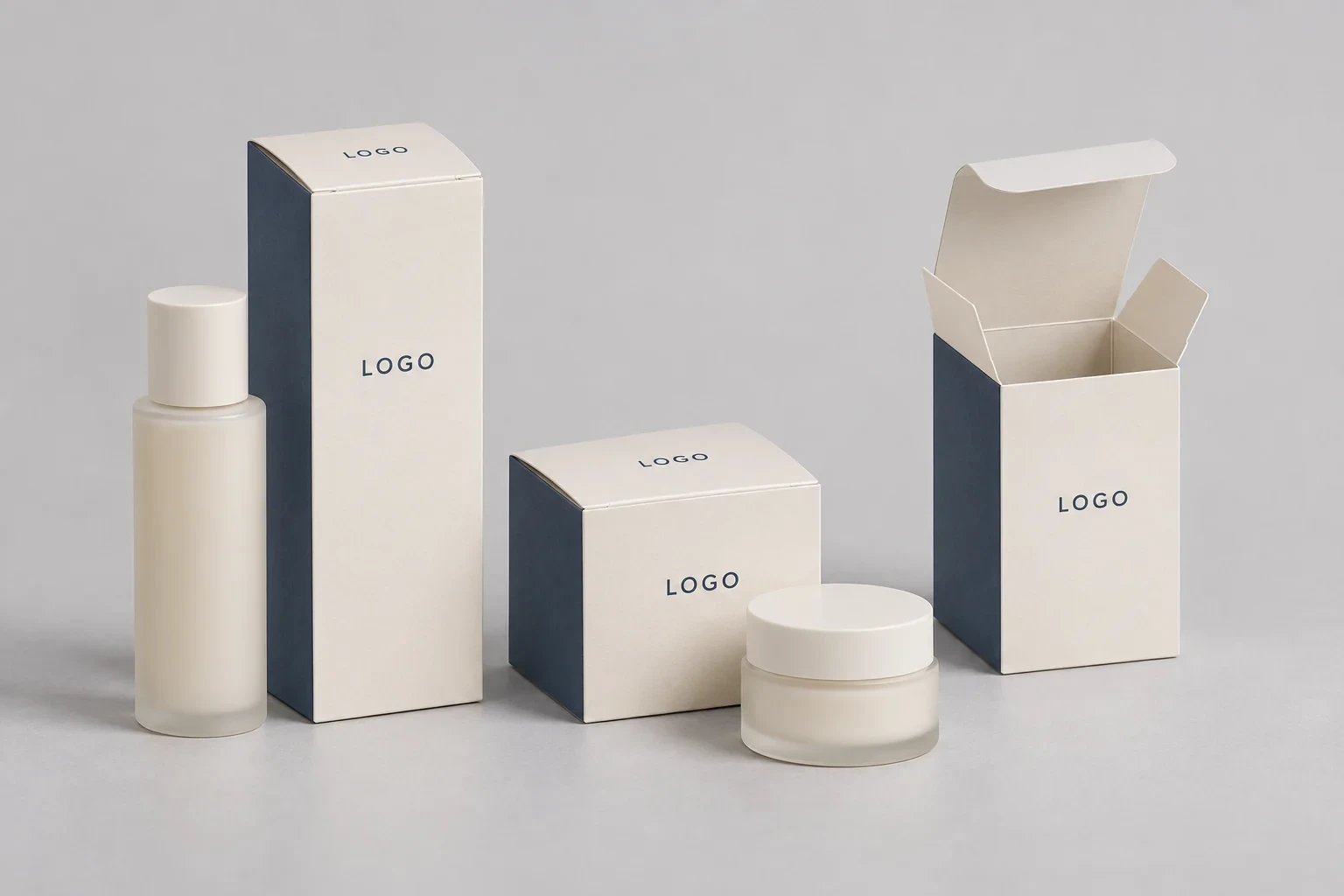
You can use one size of custom folding cartons for several products when every item fits securely and the packing process stays simple. It is worth checking, especially when you want fewer box sizes to buy and store. The question is what each product needs inside that common carton.
A short jar and a tall bottle can share branding without sharing the best box size. Before committing, compare one common carton with a small family of sizes. Put the real products into both proposals and see what the difference means for your team.
Start with the products that are hardest to fit
Line up the complete products, including caps, pumps and labels. Record their height, width or diameter and weight. Look for the widest cap, tallest pump or heaviest base. Bottle capacity alone will not tell you which carton can hold the range.
Then group products with similar packed shapes. Several bottles may share one structure. A wide jar may need its own. This gives the supplier a useful starting point for custom carton sizing without assuming that every item needs a different die.
Ask what has to change inside the common carton
A shared outer size may still need different paper supports. Ask how each product will be located, which part carries its weight and how the customer will grip it. Check that the support stays in place when the product is removed.
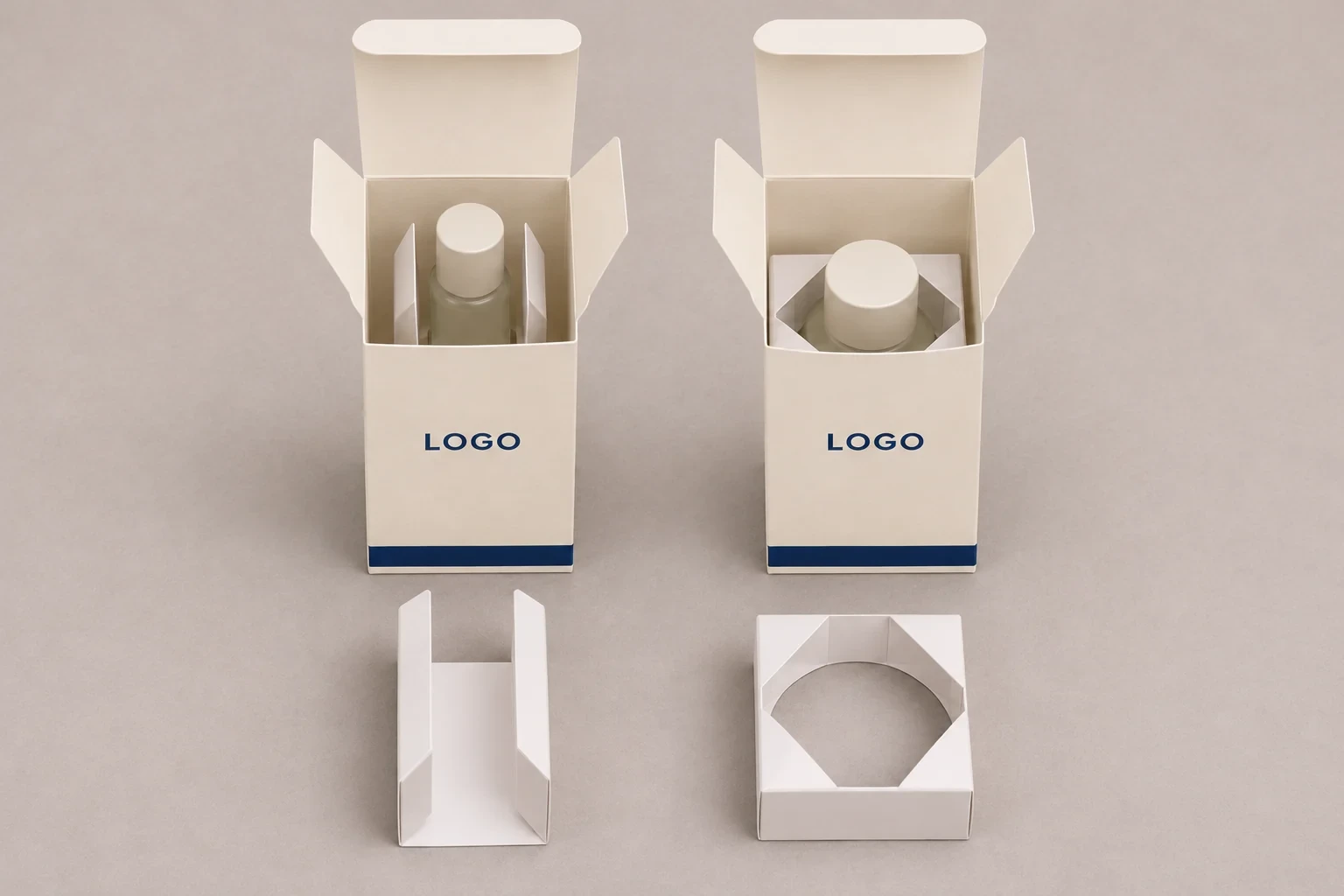
If the smaller item needs an elaborate insert just to occupy the extra room, ask for a second carton size as an alternative. Compare the additional carton setup with the insert material and packing work it could remove.
For the sample review, load every product version. Close the flaps, lift the pack as it will be handled and remove the item normally. Note loose movement, pressure on a cap or places where the label rubs. A fit check helps settle the layout; shipping protection needs its own assessment with the full parcel.
Separate a shared cutting die from shared artwork
Two cartons can have the same shape and different print. Fragrance names, shades, product instructions and codes may still create separate artwork versions. Tell the supplier the quantity for each one.
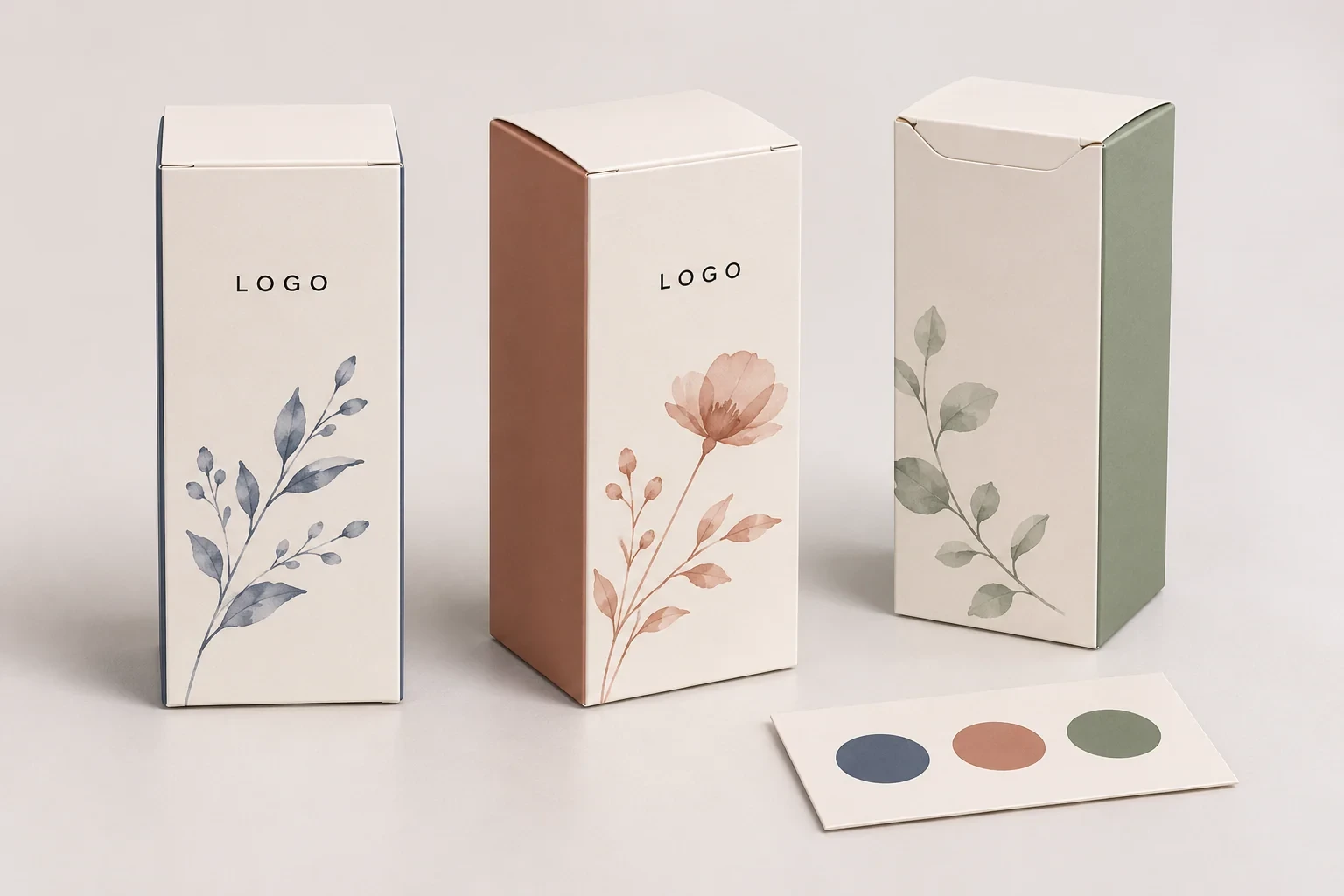
If you are considering one common print with a product-specific label, try the label on a folded sample. Check appearance and application time as well as print cost. The person filling the box needs an easy way to match the product to the correct pack.
LEETOP folding cartons start at 500 pieces. Confirm how sizes and artwork versions count toward the quoted minimum before splitting a total across the range.
Compare the cost of the complete packing plan
Ask for two clearly separated proposals: one common outer size with the supports it needs, and a small family of sizes with the supports for each. Keep the paper and finish comparable so the size decision remains visible.
- Cartons and any separate cutting or finishing tools.
- Each insert or support, with its own quantity.
- Print versions, labels and the work needed to apply them.
- Flat-pack storage, assembly steps and the proposed master-carton packing.
The common size may still be the better choice. You will have a stronger reason for choosing it once the full comparison shows where the saving comes from.
Leave room for the next product decision

Before ordering extra stock, ask what happens if the next product has a different cap or a new name. Keep the approved dieline, material specification and artwork versions together. Review the affected details when a product changes, even if the new pack will look almost identical.
Send your product range, dimensions and quantity by version through our design and quote form. We can compare a shared carton with a small size family and develop the initial design and mockup. Physical samples are quoted separately.